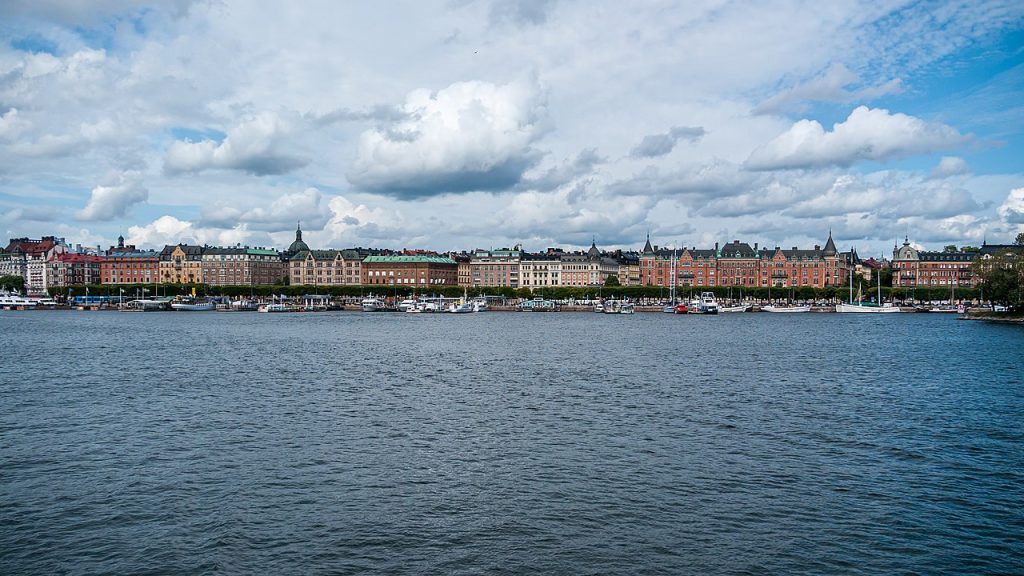
With 1.6 million residents in the urban area and 2.5 million in the metropolitan area, Stockholm is both the capital and largest city of Sweden as well as the largest urban area in Scandinavia. It was established in 1252 by Swedish statesman Birger Jarl and has been inhabited since the Stone Age. It is Sweden’s cultural, media, political, and economic hub, contributing more than one-third of the nation’s GDP.
Some of Europe’s top universities, the Vasa Museum, the Stockholm subway system, and the national football stadium are all located there. It served as the Olympic Games’ host city in 1912. The Swedish monarch’s official residence and main office are both located in Stockholm Palace, while the Royal Family’s private residence is Drottningholm Palace, which is located in the nearby town of Ekerö. Following the pillage of Sigtuna on Lake Mälaren in 1187, Birger Jarl founded it to defend Sweden from sea incursions. The Hanseatic League’s Baltic trade led to the development of Stockholm’s Old Town, which was constructed on the central island next to Helgeandsholmen starting in the middle of the 13th century. Strong ties in terms of trade and culture were established between Stockholm and Lübeck, Hamburg, Gdask, Visby, Reval, and Riga. Stockholm also played a significant role in the 15th-century negotiations between the Danish Kings of the Kalmar Union and the movement for national independence. The expansion of Stockholm during the 17th century reflects Sweden’s ascent to prominence in Europe. The Stockholm walls were demolished after the Great Stockholm Fire of 1625 destroyed the southwest corner of Stadsholmen. Population growth and economic growth both slowed after the end of the Great Northern War, but Stockholm kept its position as Sweden’s political capital and continued to grow culturally. Numerous scientific institutions, including the Karolinska Institutet , were founded in the 19th century. In the latter half of the 20th century, Stockholm is a modern, technologically sophisticated, and ethnically diverse city. It is situated where the Baltic Sea and the freshwater Lake Mälaren meet on the east coast of Sweden. It is one of the areas of Europe that is growing the fastest, and by 2024, 2.5 million people are expected to live there. In the center of the city, there is a plan to erect high-rise structures connected by elevated walkways.
With an average annual temperature of 7.9 °C (46 °F), the climate is comparable to that of Canada’s coastal Nova Scotia and the far northeastern region of the United States. 531 mm (21 in) of rain falls on average each year. The four distinct seasons of the deciduous forest are spring, summer, autumn, and winter.
